
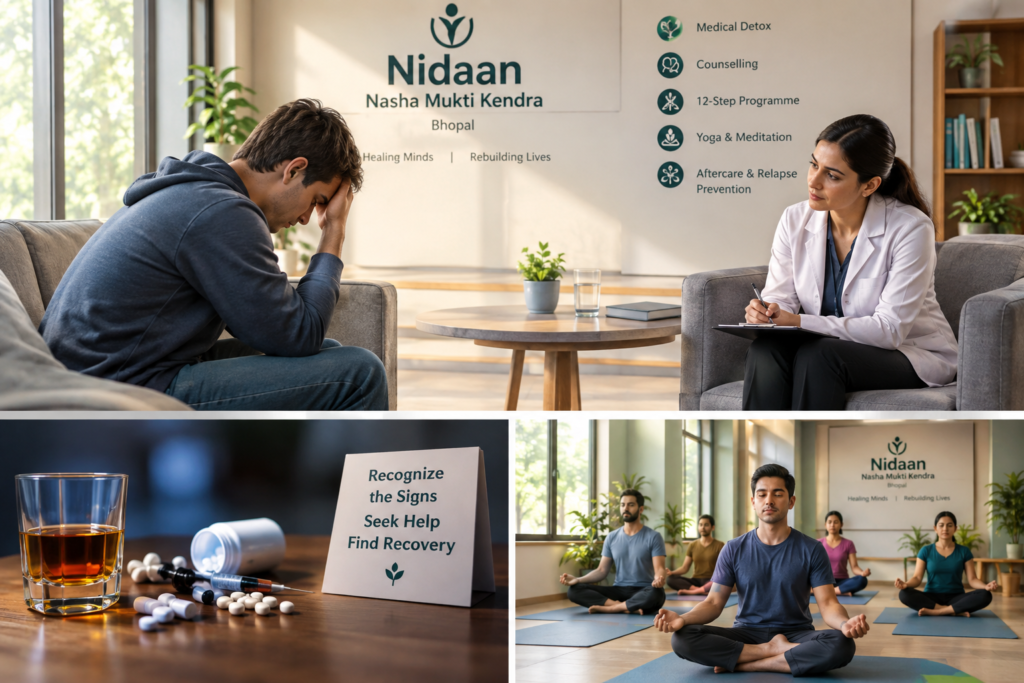
Signs That Someone Needs Professional Addiction Treatment
Addiction can begin gradually. What starts as occasional drinking or recreational drug use can eventually become a pattern that affects a person’s health, relationships, work, finances, and overall quality of life.
One of the biggest challenges for families is recognizing when substance use has progressed to the point where professional addiction treatment is needed.
A person struggling with addiction may deny that there is a problem, believe they can stop whenever they want, or repeatedly try to quit without being able to maintain it. In many cases, family members notice the warning signs before the individual is ready to acknowledge them.
Recognizing these signs early can make it easier to seek appropriate support.
At Nidaan Nasha Mukti Kendra in Bhopal, addiction recovery is approached as a comprehensive process rather than simply asking someone to stop using drugs or alcohol. The centre provides medically supervised detoxification, counselling, a 12-step recovery programme, yoga and meditation therapy, 24/7 crisis intake, and aftercare and relapse-prevention support.
What Is Addiction?
Addiction, also known as a substance use disorder, is more than simply having a habit or occasionally consuming alcohol or drugs.
It can involve compulsive substance use despite harmful consequences. Repeated substance use can affect the brain and make it difficult for a person to control cravings and stop using without appropriate support. Effective treatment can help people work toward recovery and rebuild their lives.
Importantly, addiction does not look exactly the same in everyone. Some people may show obvious physical or behavioural changes, while others may continue working or maintaining their daily responsibilities while secretly struggling with substance use.
That is why knowing the warning signs is important.
10 Signs Someone May Need Professional Addiction Treatment
1. They Cannot Stop or Control Their Substance Use
One of the clearest warning signs is repeated difficulty controlling drug or alcohol use.
The person may say:
- “I can stop whenever I want.”
- “This is the last time.”
- “I only use on weekends.”
- “I don’t have a problem.”
But they may repeatedly attempt to cut down or stop and then return to using.
For some people, cravings become increasingly difficult to manage. The substance begins to take priority over other responsibilities and activities.
If someone genuinely wants to stop but repeatedly cannot, it may be time to consider professional addiction treatment.
2. They Continue Using Despite Serious Consequences
Another important sign is continued drug or alcohol use even when the person is experiencing obvious negative consequences.
These consequences may include:
- Problems with family members
- Poor performance at work or school
- Financial difficulties
- Relationship breakdown
- Legal problems
- Health complications
- Loss of interest in normal activities
Continuing to use despite these consequences is a significant warning sign associated with substance use disorders.
At this stage, simply telling someone to “stop” may not be enough. A structured treatment programme can provide professional guidance and ongoing support.
3. Their Personality or Behaviour Has Changed
Substance use can sometimes be accompanied by noticeable changes in behaviour and personality.
Family members may notice:
- Sudden mood swings
- Irritability or anger
- Increased secrecy
- Unusual anxiety
- Aggressive behaviour
- Lack of motivation
- Suspicious behaviour
- Withdrawal from family
- Loss of interest in hobbies
SAMHSA identifies changes in mood, personality, relationships, sleep, appetite, motivation, and behaviour among possible signs associated with substance use problems.
A single behavioural change does not automatically mean someone has an addiction. However, several changes occurring together should not be ignored.
4. They Are Experiencing Withdrawal Symptoms
Some people experience physical or psychological symptoms when they reduce or stop using a substance.
Depending on the substance and the person’s circumstances, withdrawal can involve symptoms such as:
- Anxiety
- Irritability
- Sweating
- Shaking or tremors
- Difficulty sleeping
- Headaches
- Nausea
- Restlessness
- Strong cravings
Alcohol withdrawal, in particular, can sometimes become medically serious. Therefore, people with significant alcohol dependence should not assume that suddenly stopping without medical guidance is always safe.
This is one reason medical detoxification can be an important part of professional addiction treatment.
At Nidaan Nasha Mukti Kendra, medical detox programmes are designed to provide supervised support for withdrawal under the care of experienced medical professionals.
5. They Need More of the Substance to Get the Same Effect
A person may gradually develop increased tolerance, meaning they need to consume more of a substance to experience an effect they previously achieved with a smaller amount.
For example, someone who previously drank a small amount may gradually start consuming considerably more.
Increasing tolerance can contribute to escalating substance use and increase the risk of harm.
If you notice that someone’s consumption is steadily increasing, it is worth taking the concern seriously rather than waiting for a more severe crisis.
6. Their Work, Education or Daily Responsibilities Are Suffering
Addiction can gradually interfere with everyday responsibilities.
Look for patterns such as:
- Frequently missing work
- Arriving late repeatedly
- Declining work performance
- Missing classes
- Neglecting household responsibilities
- Forgetting important commitments
- Losing interest in normal activities
- Spending significant time obtaining, using, or recovering from substance use
A person’s declining performance does not necessarily prove addiction, but when it occurs alongside increasing substance use, secrecy, behavioural changes, or relationship problems, professional assessment may be appropriate.
7. Their Relationships Are Breaking Down
Addiction does not affect only the person using the substance. It can affect the entire family.
A person struggling with addiction may:
- Lie about their substance use
- Borrow or steal money
- Become emotionally distant
- Frequently argue with family members
- Break promises
- Avoid social activities
- Change their circle of friends
- Lose trust within the family
SAMHSA notes that substance use problems can be associated with relationship difficulties, social withdrawal, changing friends, and continued substance use despite problems in relationships.
When relationships are consistently being damaged because of substance use, professional intervention should be considered.
8. They Neglect Their Physical Health or Appearance
Another warning sign is a noticeable decline in self-care.
You may observe:
- Poor personal hygiene
- Sudden weight changes
- Changes in eating or sleeping patterns
- Neglected medical appointments
- Reduced attention to appearance
- Frequent unexplained health complaints
- Physical signs associated with intoxication or withdrawal
Again, these signs can have many possible causes. However, when they occur together with problematic substance use, they deserve attention.
9. They Have Tried to Quit Before but Keep Relapsing
Many people with addiction genuinely want to stop.
They may successfully remain substance-free for a period and then return to using.
A relapse does not mean that recovery is impossible or that the person has failed. Addiction can require ongoing treatment and support, and treatment plans may need to change according to the individual’s needs.
Repeated relapse can be a sign that the person needs a more structured or comprehensive recovery plan.
This is why professional treatment should not end simply when someone stops consuming a substance.
Long-term recovery may require counselling, behavioural support, family involvement, healthy routines, and relapse-prevention strategies.
Nidaan Nasha Mukti Kendra provides aftercare and relapse-prevention support intended to help individuals maintain progress after treatment.
10. Most of Their Life Starts Revolving Around Drugs or Alcohol
Perhaps one of the most concerning signs is when obtaining, using, or recovering from a substance begins to dominate a person’s life.
They may spend increasing amounts of time:
- Thinking about the substance
- Finding ways to obtain it
- Using it
- Recovering after use
- Planning their day around substance use
- Avoiding situations where they cannot use
When substance use becomes more important than family, work, education, health, hobbies, and personal goals, professional help should be seriously considered.
When Is It Time to Seek Professional Addiction Treatment?
You do not necessarily have to wait until someone’s life reaches a crisis point.
Consider seeking professional help when:
- Attempts to quit repeatedly fail
- Substance use is increasing
- Family relationships are deteriorating
- Work or education is being affected
- The person experiences withdrawal symptoms
- Their physical or mental health is declining
- They are unable to control cravings
- They continue using despite serious consequences
- There have been repeated relapses
- The family no longer knows how to help
Early intervention can provide an opportunity to address the problem before the consequences become more severe.
Why Professional Treatment Can Be Better Than Trying to Quit Alone
Many families initially try to manage addiction at home.
They may hide the person’s substance use, repeatedly warn them, take away money, or ask them to promise that they will never use again.
Although family support is extremely important, addiction can be complex and may require professional assessment and structured care.
Quality addiction treatment should be based on the individual’s needs rather than using exactly the same approach for everyone. Professional treatment may include assessment, medical care, counselling, behavioural therapies, recovery support, and continuing care.
What Happens During Addiction Treatment?
A professional rehabilitation programme may involve several stages.
1. Assessment
The treatment team evaluates the individual’s substance use, physical health, psychological wellbeing, family circumstances, and recovery needs.
2. Medical Detoxification
For people who require detoxification, withdrawal may be medically supervised.
The objective is to provide appropriate support while the body adjusts to the absence of the substance.
3. Counselling
Counselling can help individuals understand the underlying factors connected with their substance use and develop healthier coping strategies.
4. Structured Recovery
Recovery programmes can help individuals establish healthier routines and learn how to manage cravings and triggers.
5. 12-Step Recovery
A structured 12-step programme may provide a framework addressing different aspects of addiction and recovery.
6. Yoga and Meditation
Mind-body practices such as yoga and meditation can be incorporated into daily routines to support emotional balance and wellbeing.
7. Aftercare and Relapse Prevention
Recovery does not necessarily end when residential treatment ends.
Ongoing support can help individuals maintain the progress they have made and respond to potential relapse triggers.
Nidaan Nasha Mukti Kendra incorporates these components through its medical detox, 12-step programme, counselling, yoga and meditation therapy, crisis intake, and aftercare and relapse-prevention services.
How Families Can Help Someone With Addiction
If you believe your loved one needs addiction treatment, approach the situation with compassion rather than shame.
Try to:
- Choose a calm time to talk.
- Explain the changes you have noticed.
- Focus on health and wellbeing rather than blame.
- Listen without immediately judging.
- Encourage professional assessment.
- Avoid enabling harmful substance use.
- Set healthy boundaries.
- Seek professional guidance for yourself as a family member.
You do not have to diagnose your loved one yourself.
The goal is to recognize concerning patterns and encourage them to receive an appropriate professional assessment.
Why Choosing the Right Rehabilitation Centre Matters
Not every treatment programme is identical.
When considering a Nasha Mukti Kendra in Bhopal, families should look beyond advertising claims and ask important questions about the treatment approach, medical supervision, qualified professionals, counselling, confidentiality, individualized care, and aftercare.
Quality-treatment guidance emphasizes qualified staff, comprehensive assessment, individualized treatment planning, evidence-based approaches, and continuing recovery support.
Nidaan Nasha Mukti Kendra, Bhopal
Nidaan Nasha Mukti Kendra provides compassionate, medically supervised de-addiction care in a supportive environment in Bhopal, Madhya Pradesh.
The centre’s services include:
- Medical Detox
- 12-Step Programme
- 24/7 Crisis Intake
- Counselling
- Yoga & Meditation Therapy
- Home-like Environment
- Aftercare & Relapse Prevention
The centre also states that its team includes licensed doctors and counsellors and that confidentiality is maintained throughout care.
For families looking for a drug rehabilitation centre in Bhopal or professional support for drug or alcohol addiction, contacting an appropriate treatment provider can be an important first step.
Frequently Asked Questions
What are the first signs of drug addiction?
Early signs can include increasing substance use, difficulty controlling use, secrecy, mood changes, declining performance at work or school, changes in friends, withdrawal from family, and continuing to use despite negative consequences.
How do I know if someone needs rehab?
Someone may need professional addiction treatment when substance use becomes difficult to control and starts affecting their health, relationships, work, education, finances, or daily life. Repeated unsuccessful attempts to quit and repeated relapse are also important warning signs.
Can someone recover from drug addiction?
Yes. Addiction is treatable, although recovery can require ongoing support. Treatment should be tailored to the person’s needs and may involve medical care, counselling, behavioural therapies, recovery programmes, and continuing support.
Is detox the same as addiction treatment?
No. Detox focuses primarily on helping a person safely manage the physical process of stopping substance use. Comprehensive addiction treatment goes further by addressing behavioural, psychological, social, and recovery needs.
What should I do if my loved one refuses treatment?
Avoid threatening or shaming them. Have a calm conversation, explain your concerns, establish healthy boundaries, and seek professional guidance about how to approach the situation.
Can addiction relapse happen after treatment?
Yes. Relapse can occur during recovery and does not mean treatment is necessarily a failure. It can indicate that the person’s treatment or ongoing support needs to be reassessed and adjusted.
Take the First Step Toward Recovery
Recognizing the signs of addiction can be difficult, especially when the person you care about does not believe they need help.
But you do not have to wait for the situation to become a crisis.
If drug or alcohol use is affecting a person’s health, relationships, work, education, or ability to live normally, professional addiction treatment may be an important next step.
At Nidaan Nasha Mukti Kendra in Bhopal, the recovery journey is supported through medical detoxification, counselling, structured recovery programmes, yoga and meditation, 24/7 crisis intake, and continuing aftercare and relapse-prevention support.
If you or a loved one is struggling with addiction, reaching out for professional guidance can be the beginning of a healthier and more stable future.
Recovery begins with the first step.