
What Happens at a Nasha Mukti Kendra? A Complete Guide to Rehabilitation
Drug and alcohol addiction can affect every part of a person’s life — health, family, career, relationships and emotional well-being. When substance use becomes difficult to control, a structured rehabilitation programme can provide professional support, medical supervision and a safe environment for recovery.
But many individuals and families hesitate to seek treatment because they do not know what actually happens inside a Nasha Mukti Kendra.
Will there be a medical assessment? What happens during detox? Is counselling involved? How long does rehabilitation take? What happens after completing treatment?
This guide explains the addiction rehabilitation process, from the first assessment and detoxification to counselling, recovery programmes and aftercare.
For families looking for a Nasha Mukti Kendra in Bhopal, understanding the treatment process can make the decision to seek professional help less confusing and more informed.
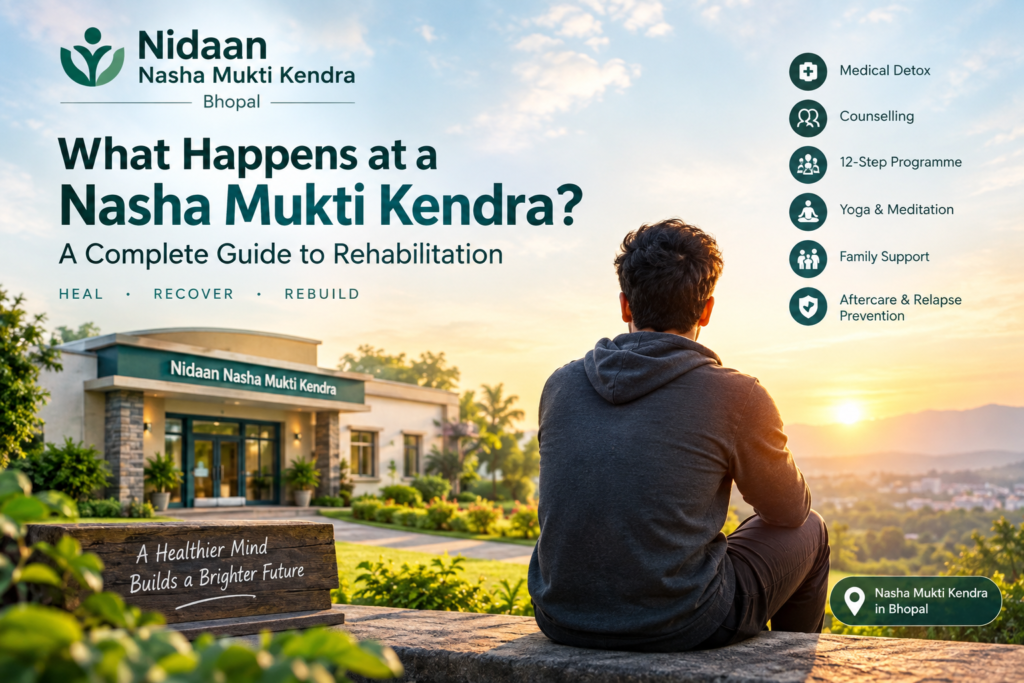
At Nidaan Nasha Mukti Kendra, Bhopal, treatment is designed around the individual’s needs, with services including medically assisted detox, a 12-step recovery programme, counselling, family support, yoga and meditation, 24/7 crisis intake and aftercare and relapse-prevention support.
SEO Information
SEO Title: What Happens at a Nasha Mukti Kendra? Complete Rehabilitation Guide
Meta Description: Wondering what happens at a Nasha Mukti Kendra? Learn about assessment, medical detox, counselling, 12-step recovery, therapy, aftercare and rehabilitation in Bhopal.
Suggested URL Slug:/what-happens-at-a-nasha-mukti-kendra/
Primary Keyword:
What Happens at a Nasha Mukti Kendra
Secondary SEO Keywords
The following keywords are incorporated naturally throughout the article:
- Nasha Mukti Kendra
- Nasha Mukti Kendra in Bhopal
- rehabilitation centre in Bhopal
- drug rehabilitation centre in Bhopal
- drug addiction treatment
- alcohol addiction treatment
- addiction treatment centre
- drug de-addiction treatment
- addiction rehabilitation
- drug rehabilitation
- alcohol rehabilitation centre
- medical detox
- medically assisted detox
- addiction counselling
- addiction recovery programme
- 12-step recovery programme
- relapse prevention
- de-addiction centre in Bhopal
Search Intent: Informational + Local Commercial
Recommended Article Length: 2,000–2,500 words
Recommended Featured Image Alt Text:What happens at a Nasha Mukti Kendra during addiction rehabilitation
What Is a Nasha Mukti Kendra?
A Nasha Mukti Kendra is a rehabilitation facility that provides structured support to people struggling with drug or alcohol dependence.
The exact treatment approach can vary between centres, but comprehensive addiction treatment may include assessment, withdrawal management, counselling, behavioural and psychosocial interventions, recovery support and continuing care.
Rehabilitation is not simply about asking someone to stop consuming drugs or alcohol. It is a longer process that can address physical health, emotional wellbeing, behaviour, relationships and the skills needed to maintain recovery.
The World Health Organization describes rehabilitation for substance use disorders as a longer-term process involving combinations of medical, psychosocial and recovery-oriented approaches.
This is why choosing an appropriate addiction treatment centre should involve looking at the complete treatment programme rather than focusing only on detoxification.
What Happens When You First Arrive at a Nasha Mukti Kendra?
The first stage is generally an initial assessment.
When a person arrives at a rehabilitation centre, the treatment team needs to understand their individual circumstances before developing a treatment plan.
This may involve discussing:
- Substance or substances being used
- Duration and pattern of substance use
- Previous attempts to stop
- Withdrawal history
- Physical health
- Mental and emotional wellbeing
- Family circumstances
- Previous treatment
- Current medications
- Recovery goals
This information helps the treatment team determine what type of support may be appropriate.
At Nidaan Nasha Mukti Kendra, the centre describes its approach as personalised, with treatment plans designed around the individual rather than using exactly the same programme for everyone.
Step 1: Medical Assessment and Treatment Planning
Before beginning intensive treatment, an individual’s health and addiction history should be considered carefully.
The purpose of assessment is to identify potential medical concerns, understand the severity and pattern of substance use and determine what level of care may be appropriate.
A treatment plan may then include different components such as:
- Medical detoxification
- Counselling
- Individual or group support
- Family counselling
- Structured recovery programmes
- Lifestyle and wellness activities
- Relapse-prevention planning
- Continuing aftercare
Not everyone requires exactly the same treatment.
A person with alcohol dependence may have different treatment needs from someone experiencing opioid or other drug dependence.
This is one reason professional assessment is important.
Step 2: Medical Detox and Withdrawal Management
For many people, medical detox is an important early stage of treatment.
Detoxification refers to the process of helping a person stop using a substance while managing withdrawal and related health concerns.
Withdrawal symptoms can vary depending on the substance, duration of use, amount used and individual health.
Possible symptoms may include:
- Anxiety
- Restlessness
- Sweating
- Tremors
- Sleep problems
- Nausea
- Irritability
- Strong cravings
- Changes in mood
Some forms of withdrawal can become medically serious. This is why individuals with significant dependence should not assume that suddenly stopping a substance without appropriate medical advice is always safe.
Nidaan Nasha Mukti Kendra lists medically assisted detox with medical supervision, withdrawal management, vital-sign monitoring, personalised detox plans and nutritional support among its services.
An Important Point About Detox
Detox is not the same as complete addiction treatment.
A person can complete detoxification and still be vulnerable to returning to substance use if the underlying addiction and associated behavioural, psychological and social factors are not addressed.
WHO’s international standards similarly note that detoxification alone should not be considered sufficient treatment for drug-use disorders.
This is why detox should generally be viewed as one part of a broader drug de-addiction treatment programme.
Step 3: Counselling and Psychological Support
Once immediate withdrawal concerns are addressed, counselling can become an important part of the rehabilitation process.
Addiction counselling can help individuals explore the factors associated with their substance use and develop healthier ways of dealing with difficult situations.
Counselling may address areas such as:
- Emotional triggers
- Cravings
- Stress
- Family relationships
- Communication
- Behaviour patterns
- Self-awareness
- Decision-making
- Coping strategies
- Future recovery goals
At Nidaan, the services page describes individual and group counselling as well as family counselling, communication-skills training, trust-building workshops and codependency awareness.
Step 4: Family Counselling and Involvement
Addiction rarely affects only one person.
Family members may experience stress, fear, anger, confusion and financial or relationship difficulties while trying to support a loved one.
Family counselling can help family members understand addiction and learn healthier ways to communicate and provide support.
It can also help address issues such as:
- Loss of trust
- Communication problems
- Unhealthy relationship patterns
- Family boundaries
- Codependency
- Expectations around recovery
Nidaan states that families are involved throughout its treatment approach and provides family counselling as part of its services.
Family involvement should, however, be appropriate to the individual’s circumstances and treatment plan.
Step 5: 12-Step Recovery Programme
Some rehabilitation centres incorporate a 12-step recovery programme into their treatment model.
The approach provides a structured framework through which individuals can work on different aspects of recovery, peer support and personal change.
Nidaan Nasha Mukti Kendra lists a 12-step recovery programme that includes peer-support groups, step-by-step guidance, group therapy, sponsorship and spiritual and emotional growth.
A structured recovery programme can help an individual develop routines and maintain focus on recovery beyond the initial detox period.
Step 6: Developing Healthy Daily Routines
Recovery is not only about avoiding drugs or alcohol.
A person may also need to rebuild everyday habits and routines.
A structured rehabilitation environment can provide opportunities to work on:
- Sleep routines
- Nutrition
- Physical activity
- Stress management
- Communication
- Social interaction
- Personal responsibility
- Healthy hobbies
- Recovery-focused routines
Developing healthier routines can be particularly important because returning to everyday life after addiction treatment may bring back familiar triggers and stressful situations.
Step 7: Yoga and Meditation During Recovery
Some rehabilitation programmes incorporate wellness practices such as yoga and meditation.
These activities can form part of a broader approach to emotional wellbeing and healthy daily routines.
Nidaan includes Yoga & Meditation Therapy among its services and describes these practices as part of its daily recovery environment.
They should be considered complementary components of a broader treatment programme rather than replacements for medically appropriate addiction treatment.
Step 8: Peer Support and Group Sessions
Recovery can sometimes feel isolating.
Group-based activities allow individuals to interact with others who are also working toward recovery.
Peer-support environments can provide opportunities to:
- Share experiences
- Learn from others
- Develop communication skills
- Reduce isolation
- Build accountability
- Practice healthy social interaction
WHO’s recovery-oriented guidance identifies peer-support groups and continuing community care among approaches that may be considered for recovery management in adults with drug dependence.
Step 9: Learning About Triggers and Relapse Prevention
Another important part of addiction rehabilitation is learning to recognise situations that may increase the risk of returning to substance use.
Triggers can differ from person to person.
They may include:
- Certain people
- Places associated with previous substance use
- Stress
- Conflict
- Loneliness
- Financial pressure
- Social situations
- Emotional distress
- Cravings
- Returning to old routines
A relapse prevention plan can help an individual identify personal triggers and develop strategies for responding to them.
At Nidaan, aftercare services include relapse-prevention planning, follow-up sessions, support-group access and a 24/7 crisis helpline.
Step 10: Preparing for Life After Rehabilitation
One of the most important questions is:
What happens after leaving the Nasha Mukti Kendra?
Completing a residential treatment programme does not automatically mean that recovery is finished.
Returning home can bring new challenges.
The individual may encounter:
- Old friends
- Previous environments
- Family conflicts
- Workplace stress
- Social pressure
- Emotional triggers
- Cravings
- Previous routines
This is why continuing support can be important.
Aftercare may include follow-up appointments, support groups, counselling, relapse-prevention planning and other forms of continuing care.
Nidaan’s aftercare programme includes monthly follow-up sessions, support-group access, relapse-prevention planning, career and life-skills guidance and a 24/7 crisis helpline.
How Long Does Rehabilitation Take?
There is no single treatment duration that is appropriate for everyone.
The length of rehabilitation can depend on factors such as:
- Type of substance
- Severity of dependence
- Duration of substance use
- Previous treatment history
- Withdrawal needs
- Physical health
- Psychological needs
- Family support
- Progress during treatment
- Risk of relapse
Some individuals may require a shorter period of structured treatment, while others may benefit from longer-term residential or continuing care.
The important point is that rehabilitation should be based on individual treatment needs rather than an arbitrary timeline.
What Is the Difference Between Detox and Rehabilitation?
This is one of the most common questions families ask.
Detox
Detox primarily focuses on managing the process of stopping substance use and addressing withdrawal-related concerns.
Rehabilitation
Rehabilitation is broader.
It can involve:
- Counselling
- Behavioural support
- Recovery programmes
- Family involvement
- Peer support
- Lifestyle changes
- Relapse prevention
- Continuing aftercare
In simple terms:
Detox helps address the immediate physical process of stopping substance use, while rehabilitation focuses on the broader journey of recovery.
WHO distinguishes detoxification from longer-term treatment and rehabilitation and emphasises the importance of continuing treatment beyond detoxification.
What Addictions Can Be Treated at a Nasha Mukti Kendra?
Treatment varies by centre and the individual’s needs.
Nidaan Nasha Mukti Kendra lists treatment for several forms of substance dependence, including:
- Alcohol addiction
- Drug addiction
- Opioid addiction
- Other substance-related dependencies
Its services are designed to provide a structured drug addiction treatment and alcohol addiction treatment environment with medical, counselling and recovery support.
If someone is experiencing dependence on a particular substance, a professional assessment should determine the most appropriate treatment approach.
How to Choose a Nasha Mukti Kendra in Bhopal
If your family is searching for a Nasha Mukti Kendra in Bhopal, do not choose a centre only because of advertisements or promises.
Consider asking:
1. Is medical supervision available?
Withdrawal can sometimes involve significant health risks, so ask how medical care is provided.
2. Is treatment personalised?
Every person’s addiction history and recovery needs can be different.
3. Does the centre provide counselling?
Counselling and psychosocial support can be important components of comprehensive treatment.
4. Is family involvement available?
Family counselling may help address communication and relationship challenges.
5. Is there an aftercare programme?
Recovery continues beyond discharge, making continuing support an important consideration.
6. Is confidentiality explained clearly?
Families should understand how their information and treatment records are handled.
7. Is emergency support available?
A centre offering a clear crisis-response process can be valuable when urgent help is needed.
Nidaan Nasha Mukti Kendra in Bhopal
Nidaan Nasha Mukti Kendra provides medically supervised de-addiction and rehabilitation support in Bhopal, Madhya Pradesh.
The centre describes its environment as safe, supportive and home-like and currently lists 24/7 crisis intake, medically assisted detox, a 12-step recovery programme, counselling, yoga and meditation therapy, 24/7 emergency pick-up and aftercare and relapse-prevention services.
The centre’s contact page lists its Bhopal location at Shri Gokul Green Farms, Plot No. 29, Nathubarkheda Road, Bhopal, Madhya Pradesh 462044, and states that its team is available 24/7.
For families seeking a drug rehabilitation centre in Bhopal, understanding the treatment programme and asking questions about medical care, counselling, recovery support and aftercare can help them make a more informed decision.
When Should You Consider Professional Addiction Treatment?
You may want to seek professional guidance when:
- A person repeatedly tries but cannot stop using drugs or alcohol.
- Substance use is affecting family relationships.
- Work or education is being affected.
- There are withdrawal symptoms.
- Substance use is becoming more frequent or severe.
- The person continues using despite serious consequences.
- There have been repeated relapses.
- The family does not know how to respond.
- Substance use is creating significant physical, emotional or social problems.
You do not necessarily need to wait until the situation becomes a crisis before asking for professional advice.
Early professional assessment can help determine what type of support may be appropriate.
Frequently Asked Questions
What happens at a Nasha Mukti Kendra?
A rehabilitation programme may include assessment, medical detoxification when clinically appropriate, counselling, group support, structured recovery programmes, family involvement, wellness activities, relapse prevention and aftercare.
How does a Nasha Mukti Kendra help with drug addiction?
A structured Nasha Mukti Kendra can provide a supportive environment where individuals receive professional assessment, withdrawal management when required, counselling and recovery-focused support.
Is detox enough to recover from addiction?
No. Detox addresses the process of withdrawal but does not by itself address all of the behavioural, psychological and social aspects of addiction. WHO specifically notes that detoxification alone is not sufficient treatment for drug-use disorders.
Is there a Nasha Mukti Kendra in Bhopal?
Yes. Nidaan Nasha Mukti Kendra provides de-addiction and rehabilitation services in Bhopal, including medically assisted detox, counselling, a 12-step programme, 24/7 crisis intake and aftercare support.
Does rehabilitation include family counselling?
It can. Nidaan lists family counselling, communication-skills training, trust-building workshops and codependency awareness among its services.
What happens after completing rehabilitation?
Aftercare may include follow-up sessions, support groups, relapse-prevention planning, counselling and other continuing support. Nidaan lists these services as part of its aftercare programme.
Can someone relapse after rehabilitation?
Relapse can occur during recovery. This is why continuing support and relapse-prevention planning can be important after completing a structured treatment programme.
Take the First Step Toward Recovery
Understanding what happens at a Nasha Mukti Kendra can remove some of the uncertainty surrounding addiction treatment.
Professional rehabilitation is more than detoxification. It can involve medical care, counselling, family support, structured recovery programmes, healthy routines, peer support and continuing aftercare.
If you or someone you care about is struggling with drug or alcohol dependence, speaking with a qualified treatment professional can help you understand the available options.
For families in Bhopal seeking professional drug addiction treatment, alcohol addiction treatment or drug de-addiction treatment, Nidaan Nasha Mukti Kendra provides a structured recovery environment with medical detox, counselling, a 12-step programme, yoga and meditation, crisis support and aftercare.
Recovery is a process. The first step is reaching out for appropriate help.